
Biodiversity in the Agricultural Landscape: Lessons from Ten Years of Monitoring
Bern / Zurich, 01.07.2025 — Agroscope has monitored the biodiversity of the Swiss agricultural landscape since 2015. Taken as a whole, the situation has not changed over this period. Individual improvements can be observed in the ecological focus areas in particular.
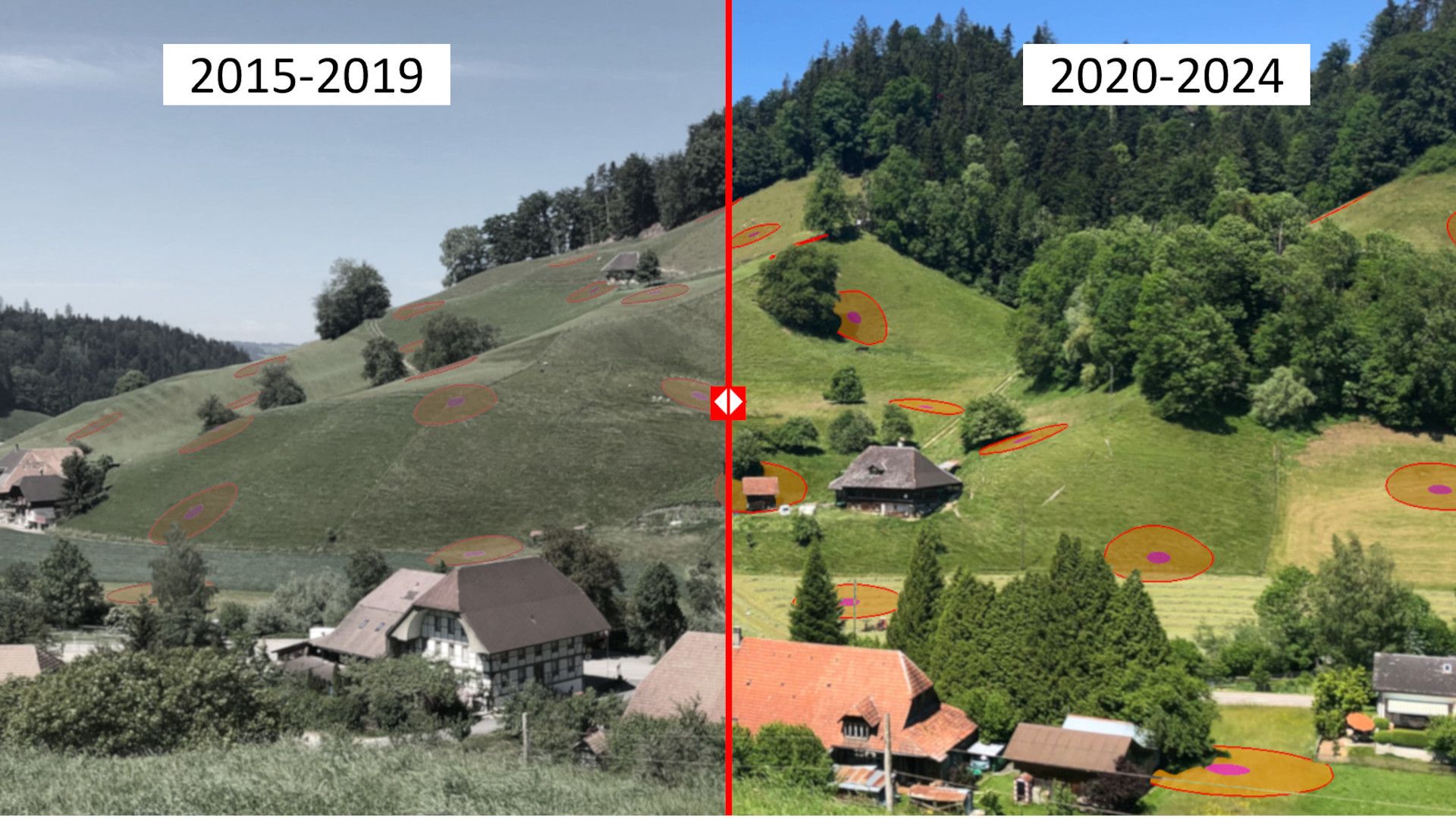
Agroscope has conducted the ‘Agricultural Species and Habitats’ (‘ALL-EMA’) Monitoring Programme on behalf of the Federal Office for Agriculture (FOAG) and the Federal Office for the Environment (FOEN) since 2015. The aim of ALL-EMA is to quantify the status and development of biodiversity in the Swiss agricultural landscape at regular intervals. To do this, researchers analyse the diversity of plants, butterflies, breeding birds and their habitats. They have now analysed the second survey covering the years 2020−2024 and compared it with the first survey (2015−2019).
Species diversity is largely unchanged
ALL-EMA has shown that plant diversity in the plain region has scarcely changed over the past ten years. Two trends are responsible for this stagnation: firstly, the vegetation indicates lower-nutrient conditions, which has a positive effect on species diversity. Secondly, the plant communities are becoming increasingly similar, which leads in the longer term to a decline in large-scale plant species diversity. Researchers will investigate the reasons for this in the third ALL-EMA survey.
A similar picture has emerged for butterfly and breeding-bird diversity, which has remained largely stable over the last ten years; however, the incidence of already-endangered breeding-bird species has declined even further.
Nevertheless, the monitoring programmes have revealed several positive trends in specific regions; for example, typical plant species of the agricultural landscape in the plain region have increased due to well-managed, high-quality ecological focus areas (EFAs).
Surface area of particularly valuable habitats stagnating
Management form and intensity depend heavily on topography. Over the course of the last century, agricultural land in the plain region has been intensively used and optimised for production. A diverse agricultural landscape with valuable habitats promotes biodiversity – something that can be seen clearly in the mountain region in particular.
The diversity of ecologically particularly valuable habitats in Switzerland remains stable, and their percentage of total area also remains unchanged at 11%.
Ecological focus areas are species-rich
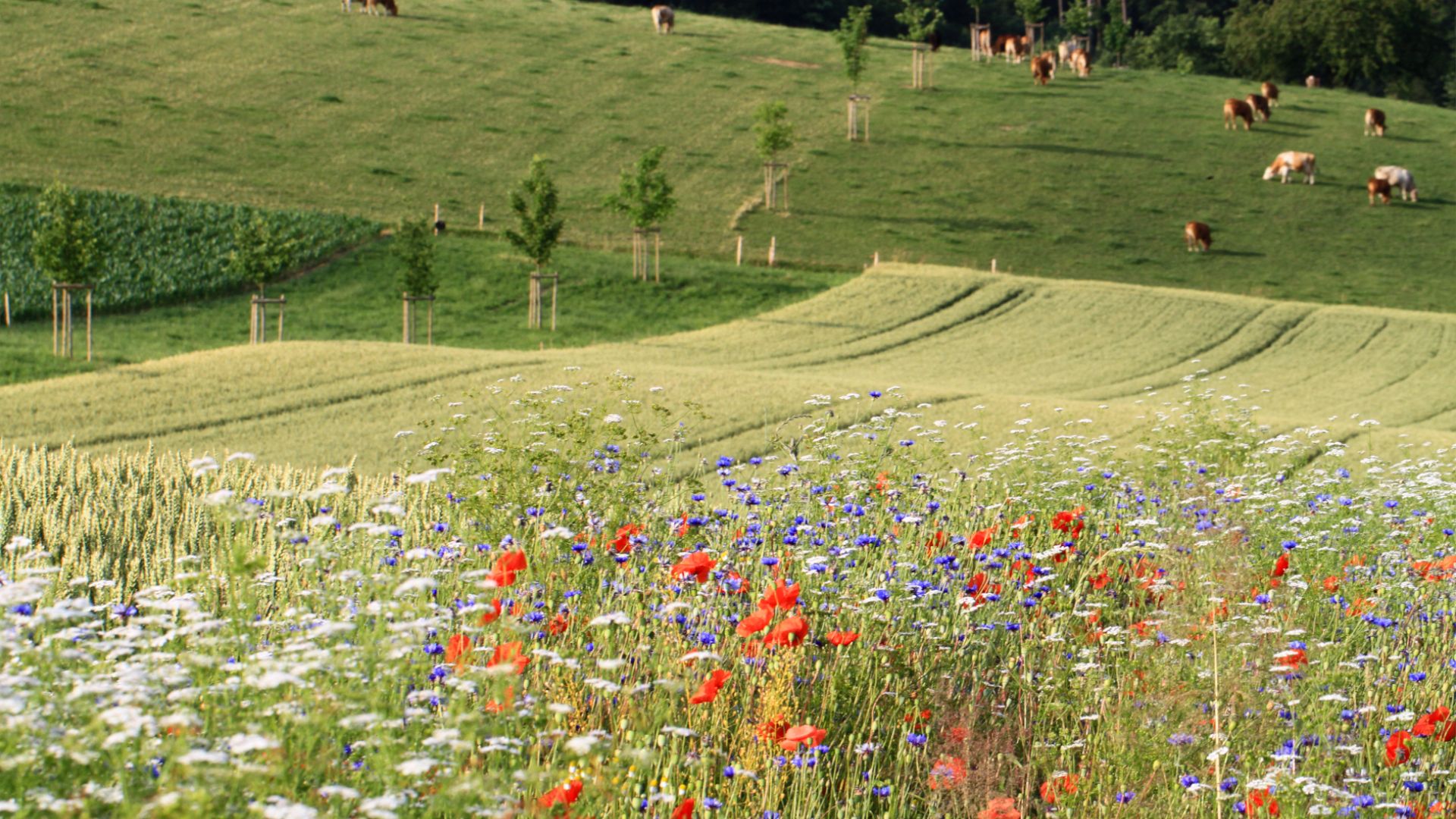
Ecological focus areas showed higher species diversity than other agricultural land. In contrast to other agricultural surfaces, species and habitat diversity within some EFAs increased between the first and second surveys. To ensure that the positive development of species and habitat diversity in Switzerland’s agricultural landscape continues, a stronger focus should be placed on site specificities and EFAs should be better interconnected in the landscape in a more ecologically efficient manner.
Prospects
ALL-EMA’s third survey (2025–2029) was launched this year. As part of this survey, the impact of direct payments that promote biodiversity will be studied by means of a trend analysis. ALL-EMA’s continuing surveys are crucial for the future reliable assessment of the status and development of biodiversity in the Swiss agricultural landscape – particularly in the context of changing environmental conditions and agricultural policy measures.

Links
ALL-EMA ‘Agricultural Species and Habitats’ Monitoring Programme (www.all-ema.ch)