
Soil protection in agriculture
Soil is one of the most important production bases in agriculture and must therefore be managed sustainably.
Sustainable soil use in agriculture
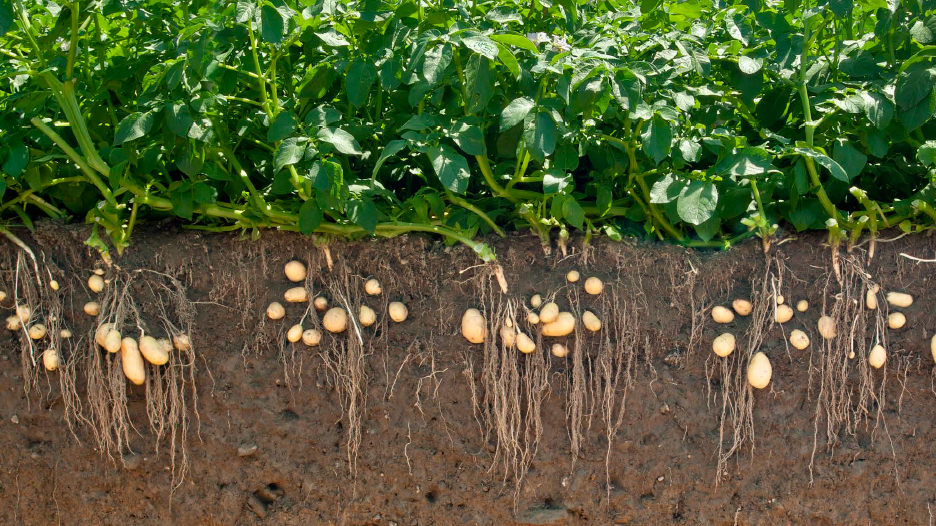
Soil is one of the most important bases of production in agriculture, and must be managed carefully to ensure sustainable food production and to meet the farming needs of future generations. Knowledge about the characteristics and state of soils is crucial for using soils based on local conditions and for maintaining soil fertility.
Soil provides the basis for our food
Soil is the production basis for agriculture and forestry, providing water and nutrients for plant growth. Soil also filters water, stores carbon and is a gene pool and home to an incredibly large number of different organisms. Many of these organisms are involved in the formation of soils and are an indispensable link in the cycle of matter in nature.
The federal government has drawn up the ‹Swiss National Soil Strategy› to ensure that soil is managed sustainably. The vision of this strategy is to preserve soil functions, so that future generations can also farm the soil.
Soil fertility is at stake
A number of factors exacerbate soil composition and fertility. Soil loss is particularly impacted by urbanisation, which makes soil permanently unavailable for agricultural use. The productive capacity of soil is impaired by pollution, intensive farming and soil depletion through erosion. The gradual decline in soil organic matter also reduces resilience to future climate events such as drought or heavy rainfall.
The Swiss Soil Monitoring Network (NABO) regularly monitors the state of soils at over 100 locations. The federal government publishes the data and adjusts soil protection measures accordingly. A crop rotation areas sectoral plan has been set up to protect the soils most valuable for agricultural production. Each canton must maintain a minimum amount of crop rotation areas on its land. This allows Switzerland to ensure a certain degree of self-sufficiency, even in situations of severe shortage.
Lack of soil information
The Swiss Plateau has some very productive soils, which need to be maintained and used in a site-appropriate way. Soil data is essential to do this. So far, however, data of sufficient quality is only available for 13% of the crop rotation areas. This is why the federal government is developing a procedure for the standardised mapping of soils in Switzerland. The Centre of Excellence for Soil, which has been active since 2020, is testing new processes and digital technologies for the efficient collection of soil information. Of course, soil properties of agricultural plots can only be used in a way that is adapted to the location if they are available.
Existing tools
Various tools are available to advise the agricultural sector on the careful use of soil. Using the ‹humus balance calculator›, farmers can estimate the input and decomposition of organic material, taking into account the crops grown and the farming methods used. The risk of compaction damage can be reduced with the help of the ‹Terranimo› tool, which simulates the maximum load-bearing capacity of a soil, taking into account the soil type, soil moisture and machine combination when driving on it. The erosion risk map indicates areas with highly erodible soils. The ‹CT-Tool› provides an estimate of the risk of soil erosion by planned cultivation, thereby reducing the risk of erosion. Farmers can determine the general condition of the soil structure themselves in the field using the ‹spade test›. This allows them to observe the influence of the management measures taken on their soils and adjust them accordingly.
Further information
The FOAG provides a reduced English-language version of its website that does not include all further information such as documents, legislation or links. These can be found on the pages in the three official languages (German, French and Italian).