
Animal Tracing Database
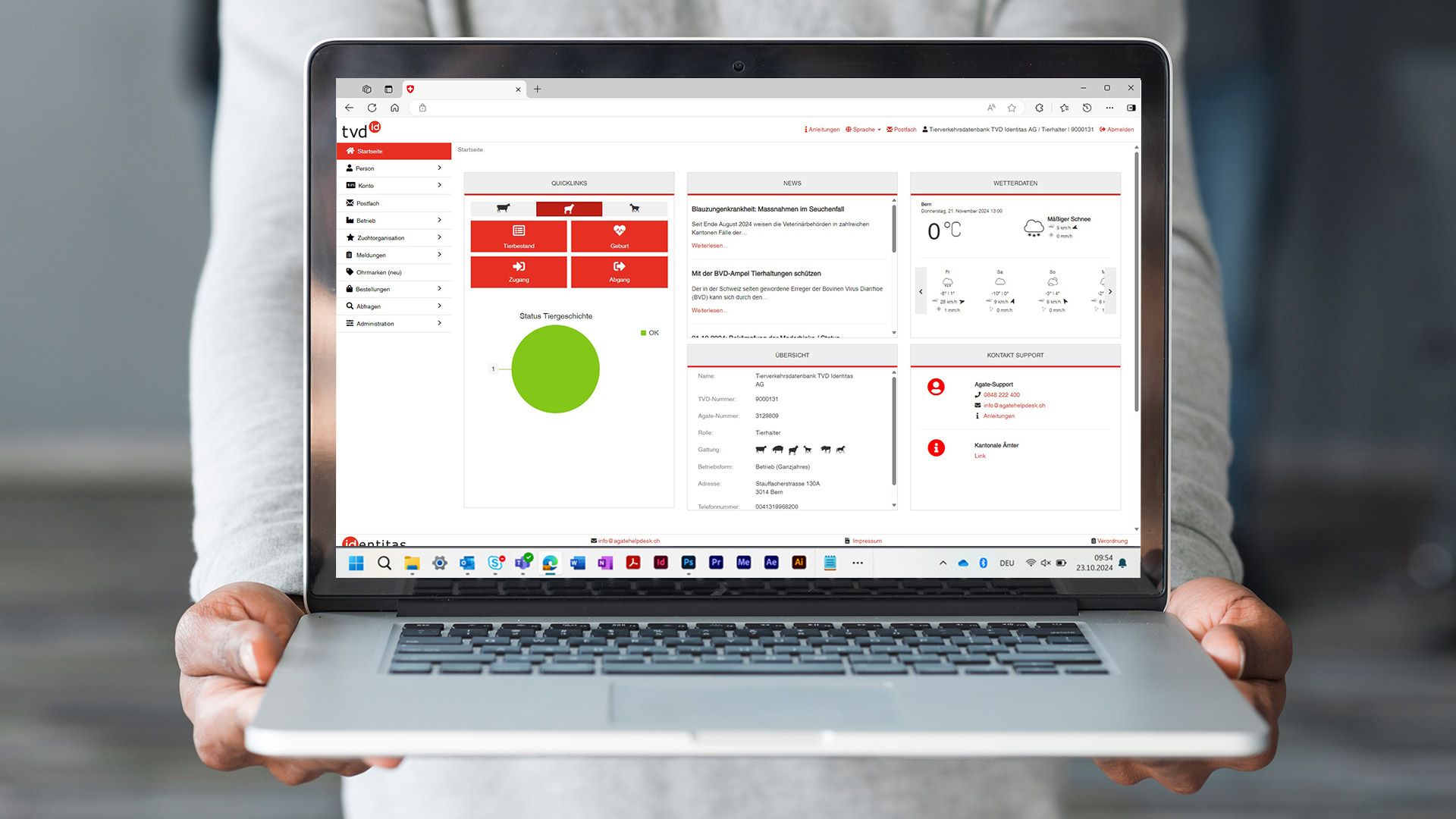
The Animal Tracing Database (ATD) is a Swiss system for registering and tracing livestock such as cattle, pigs, sheep, goats and wild animals kept in enclosures. It plays an important role in food safety and containment of animal diseases. An efficient recording system ensures that information such as birth, movement and slaughter dates and changes of owner are entered in the database.
Mandate
The ATD is run by Identitas AG on behalf of the Federal Office for Agriculture. The database assigns unique identities displayed on ear tags to all livestock kept in Switzerland. Since 2000, all cattle births, movements and slaughters have been registered in the ATD. In 2011, the registration requirement was extended to equidae (horses, donkeys, mules and hinnies) and to pig movements and slaughters. The next stage of the expansion followed in 2014, when sheep, goat and poultry slaughters were included in the database. Finally, information on poultry placings has been required since 2016.
Traceability
These animal tracing measures enable the veterinary and food authorities to take appropriate action quickly when emergencies arise. ATD data is also used to implement agricultural legislation, such as allocating meat import quotas based on slaughter figures, contributing to the costs of animal by-product disposal and making animal-related direct payments (see livestock unit calculator).
Use of data
Animal health services and breeding, producer and label organisations can access and use the ATD data in strict compliance with data protection regulations. Because the ATD data is used by different stakeholders for multiple purposes, its quality is constantly improving. The ATD is now the central source of information for animal data.
Agate support
Do you have questions about logging in or technical problems? Agate support will be happy to help.
Monday to Friday
08.00 a.m. – 4.30 p.m.
Phone 0848 222 400
Do you have a different concern? Contact the relevant application or canton directly.
Further information
The FOAG provides a reduced English-language version of its website that does not include all further information such as documents, legislation or links. These can be found on the pages in the three official languages (German, French and Italian).