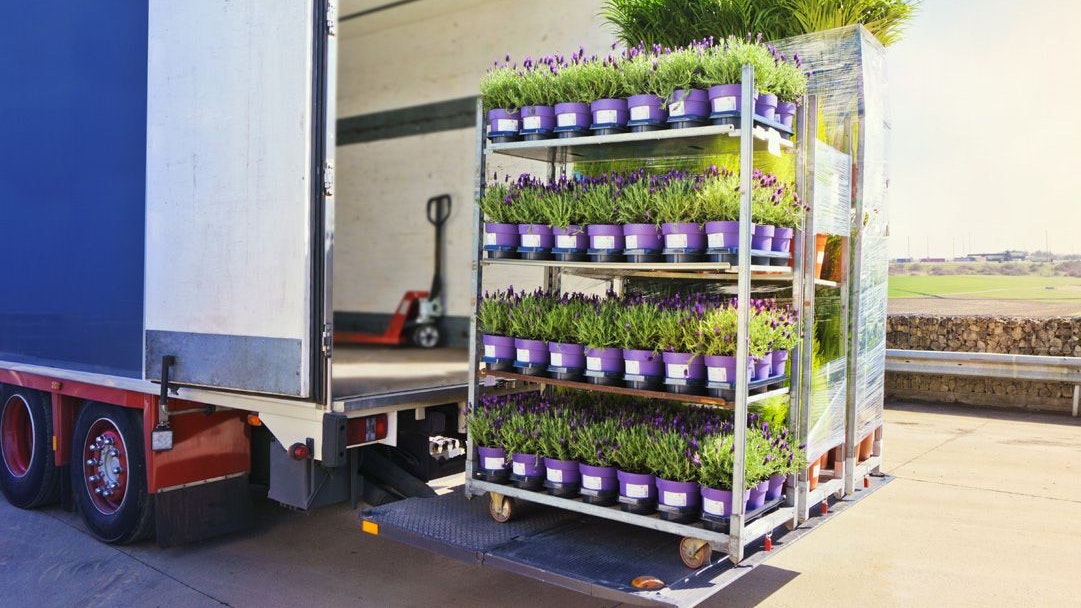
Do you wish to export plants, parts of plants or plant products (e.g. fruit, seeds or cut flowers) from Switzerland, or take them with you to another country? Or perhaps you would like to do this with wood and wood products, or used forestry and agricultural machinery and vehicles? If so, it is important to observe the phytosanitary regulations of the destination country. Exporting poses a risk that harmful plant diseases and pests may be carried over and become established and spread in the destination country.
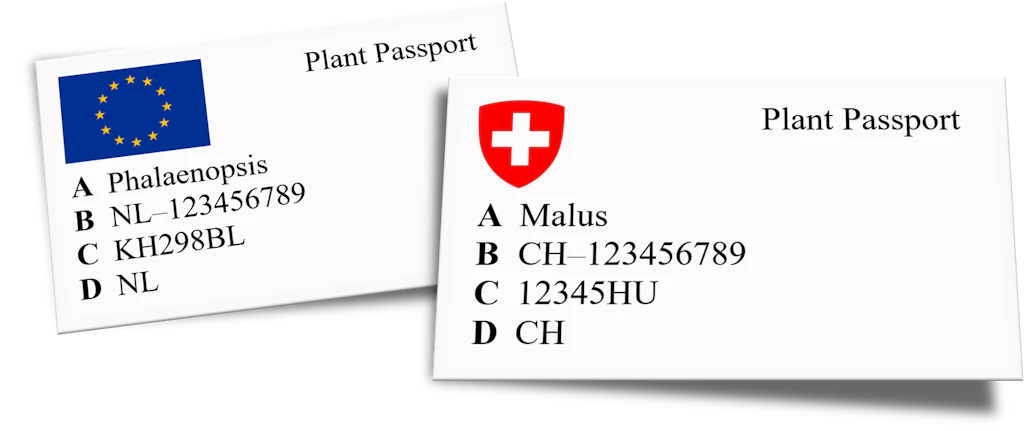
A plant passport is generally required for the export of plants and plant material to EU countries.
A phytosanitary certificate is required for exports to non-EU countries.
In order to comply with the phytosanitary regulations of the destination country, commodity inspections, laboratory analyses or field inspections are usually necessary.
It is advisable to check the applicable regulations in the destination country at an early stage and, if necessary, to apply for a phytosanitary certificate from the Swiss Federal Plant Protection Service (SPPS) at www.phytosanitarycertificate.ch.
Exporting into the EU and Liechtenstein
The bilateral Agreement on Agriculture between Switzerland and the EU ensures uniform rules for the import and export of plants and plant material within Switzerland, the EU and Liechtenstein. The plant passport governs import/export within this region.
This applies to private individuals, companies and professionals
Certain plant goods require a plant passport in order to be imported into Switzerland or exported to the EU.
If you wish to take or send plants or plant products from Switzerland to an EU country, you should find out about the applicable regulations in advance. It is best to contact the NPPO of the relevant destination country directly.
If goods requiring a plant passport are carried in personal luggage or as personal effects and are intended solely for personal use, a plant passport is generally not required within the EU. However, some EU countries may still require a plant passport in such cases.
If plants are sent by post or courier, a plant passport is always required.
Generally speaking, fruit, vegetables and cut flowers may be exported without a plant passport. Exceptions are listed under ‘Goods requiring a plant passport'.
Further information on the plant passport can be found on the Plant passport System page.
Goods requiring a plant passport
Plants and parts of plants (other than seeds) which are intended to remain planted, to be planted or to be replanted, regardless of the botanical species – for example, pot plants, plant arrangements in bowls, seedling, cuttings, tissue cultures, bulbs, tubers, etc.
Seed potatoes (Solanum tuberosum), pines (Pinus), Douglas fir (Pseudotsuga menziesii)
Citrus fruits with leaves and peduncles
Wood obtained from Juglans (walnut), Platanus (plane) and Pterocarya (wingnut)
Plants and parts of plants not intended for planting (other than their fruits and seeds) of the following genera: Choisya (Mexican orange) and its hybrids; Citrus (citrus plants), Fortunella (kumquat), Poncirus (trifoliate orange) and their hybrids (incl. fruits with leaves and peduncles); Casimiroa, Clausena, Murraya (orange jasmine, curry tree), Vepris, Zanthoxylum and Vitis (grapevine)
Before a business is permitted to export plant products to the EU or to non-EU countries, it must first register by filling out the corresponding business registration form (available only in German, French and Italian). More details can be found on the Plant passport system page
Plant passports may only be issued by authorised businesses. Authorisation may also be granted to private individuals, provided they trade in plants commercially and meet the legal requirements.
The provisions for plant species subject to the CITES Convention apply. Information about species protection can be obtained from the Federal Food Safety and Veterinary Office (FSVO).
Good to know
Since 1 January 2021, the United Kingdom (with the exception of Northern Ireland) is considered a non-EU country for the import and export of plant products.
In phytosanitary terms, the Canary Islands, Ceuta, Melilla and the French overseas departments and territories are considered non-EU countries.
Exports to non-EU countries
The regulations of the destination country apply to the export of plants, parts of plants and plant products (e.g. fruit, seeds, cut flowers), as well as wood, wood products and used forestry and agricultural machinery to non-EU countries.
Please contact the NPPO of the destination country directly in advance to find out which goods are subject to plant protection regulations and which phytosanitary requirements must be met (see Procedure: Applying for a phytosanitary certificate).
In most cases, a phytosanitary certificate must be obtained in order to import goods from Switzerland into a non-EU country.
A phytosanitary certificate is an official international document that confirms that the plants, parts of plants or other regulated goods to be exported meet the phytosanitary requirements of the destination country. The phytosanitary certificate (in paper form) accompanies the export consignment during transport and is generally valid for two weeks from the date of issue. The period of validity is determined by the date when the goods leave the exporting country.
In the case of sea freight, the certificate remains valid until the goods arrive in the destination country. This is subject to the export documents confirming that the consignment left the exporting country within the two-week period.
The phytosanitary certificate is also available in digital form, known as an ePhyto (‘electronic phytosanitary certificate’). It contains the same information as the paper phytosanitary certificate but does not need to physically accompany the consignment. Switzerland does not currently use ePhytos for exports.
A phytosanitary certificate can be obtained from the Swiss Federal Plant Protection Service (SPPS) at www.phytosanitarycertificate.ch.
The SPPS issues the phytosanitary certificate for export once it has been verified that the goods comply with the phytosanitary requirements of the destination country. Depending on the specifications, this verification is carried out through visual inspections, laboratory analyses and/or field inspections. In certain cases, additional multi-year monitoring of the area for specific organisms is required. In order to avoid delays, please notify the SPPS as early as possible before the planned export.
Important: A phytosanitary certificate can only be issued for:
businesses or private individuals with an address in Switzerland and
plants and parts of plants located in Switzerland.
Applying for a phytosanitary certificate
Obtaining a phytosanitary certificate involves three stages: clarifying phytosanitary import requirements of the destination country, applying for a phytosanitary certificate and, finally, SPPS inspection. Information on what needs to be done at each stage is provided below.
Import regulations for plants, parts of plants, plant products, wood and wood products, or used forestry and agricultural machinery vary from country to country. You must therefore check the exact requirements with the national plant protection organisation (NPPO) of the destination country before export. The easiest way to do this is for the recipient to do so locally. The NPPO issues the phytosanitary import requirements in the form of an import permit or an equivalent document. If this document is not available in English, you must have it translated into one of the following languages: German, French, Italian or English.
The contact details of NPPOs can be found on the website of the International Plant Protection Convention (IPPC).
If the import regulations of the destination country require a phytosanitary certificate in order to export the goods in question, you may apply for it online here: www.phytosanitarycertificate.ch.
Please submit your application for a phytosanitary certificate as early as possible. If you have any questions, the SPPS will guide you through the procedure. Once the application has been received, it will take some time for the SPPS to process it. Depending on the clarification required, any necessary inspections or laboratory analyses, it may take a few days, weeks or months.
When filling out the application form, please provide or attach the following information:
Sender’s name and address (including email address, telephone number and contact person)
Recipient’s name and address
NPPO of the destination country
Place of origin of the goods
Means of transport
Point of entry in the destination country (name of the airport, port or customs office, if known)
Detailed description of the plants or parts of plants (scientific name in Latin) or the make and chassis number of the piece of equipment
Quantity of goods
Import regulations established by the NPPO of the destination country (must be written in German, French, Italian or English).
In addition, documents must be attached that are relevant to the assessment of the application or that provide information on the origin of the goods and/or their phytosanitary status. These may include, for example, the import authorisation, delivery note, invoice, certificate of origin or analysis results.
The SPPS checks your application for completeness. If necessary, it will request additional information or arrange for phytosanitary export inspections or laboratory analyses of the goods. Inspections take place on working days only. Depending on the volume of enquiries, it may take up to two weeks before an inspection can be carried out. If the goods comply with import regulations, the certificate will be issued and sent to you by priority mail along with an invoice. The fees can be found at www.phytosanitarycertificate.ch.
Contact for enquiries
Export of field crops, vegetables, fruit and berry plants, vines, medicinal and ornamental plants, seeds, plants as personal effects, and used forestry and agricultural machinery and vehicles:
Geneva Office of the Swiss Federal Plant Protection Service (SPPS) phyto.geneve@blw.admin.ch | Tel. +41 58 464 33 88
There are various export routes for shipments to non-EU countries – by post or courier, as air passenger luggage or via an EU country. In all cases, the phytosanitary import regulations of the destination country apply. Information about each route is provided below.
When sending items by post or via other courier services, the phytosanitary import regulations of the destination country must also be observed. Accordingly, a phytosanitary certificate must be applied for and enclosed with the parcel. Depending on the destination country, additional requirements may apply, such as labelling the parcel or providing the tracking number.
It is therefore advisable to contact the relevant NPPO of the destination country well in advance to inquire about the applicable regulations.
When bringing souvenirs or gifts with you whilst travelling, the phytosanitary import requirements of the destination country must also be observed. Accordingly, a phytosanitary certificate must be applied for and carried with you while travelling. In some countries, however, there are tolerated allowances for certain goods when travelling. You should check in advance with the relevant NPPO of the destination country to see if this applies
Upon request, the SPPS issues a pre-export certificate for the following goods if they have been grown, stored or processed in Switzerland and are to be exported to a non-EU country via an EU Member State:
Plants
Parts of plants
Plant products
Wood
Wood products
Used forestry and agricultural machinery
The pre-export certificate confirms to the EU Member State that the goods comply with the phytosanitary requirements of the destination country. It also specifies the origin of the goods and the phytosanitary status of the place of production. Furthermore, it contains details of inspections, analyses and measures taken to protect plant health.
On this basis, the EU Member State can issue the final phytosanitary certificate for re-export to the destination country.
Important: A pre-export certificate can only be issued if the phytosanitary import requirements of the destination country are known. As with the phytosanitary certificate, an import authorisation or an equivalent document is therefore required.
Contact for questions:
Pre-export certificates for field crops, vegetables, fruit and berry plants, vines, medicinal and ornamental plants, seeds, plants transported as personal effects, and used forestry and agricultural machinery and vehicles:
Geneva Office of the Swiss Federal Plant Protection Service (SPPS) phyto.geneve@blw.admin.ch | Tel.+41 58 464 33 88
Pre-export certificates for wood, wood products and forest seeds:
Certain goods are subject to specific phytosanitary requirements when exported. These are set out below.
Are you moving to a non-EU country and wish to take your plants with you as household effects? Please check the import regulations of the destination country in advance and apply for the required phytosanitary certificate here: www.phytosanitarycertificate.ch.
Depending on the import regulations to be complied with, your household effects will be subject to a phytosanitary inspection and, if necessary, specific laboratory tests before the phytosanitary certificate is issued. These checks are carried out by the relevant authority either at Geneva Airport, Zurich Airport or at your home.
Please note: A phytosanitary certificate cannot be issued for all plants. Some destination countries prohibit the import of certain plants or apply conditions that cannot be met when transporting plants as household effects.
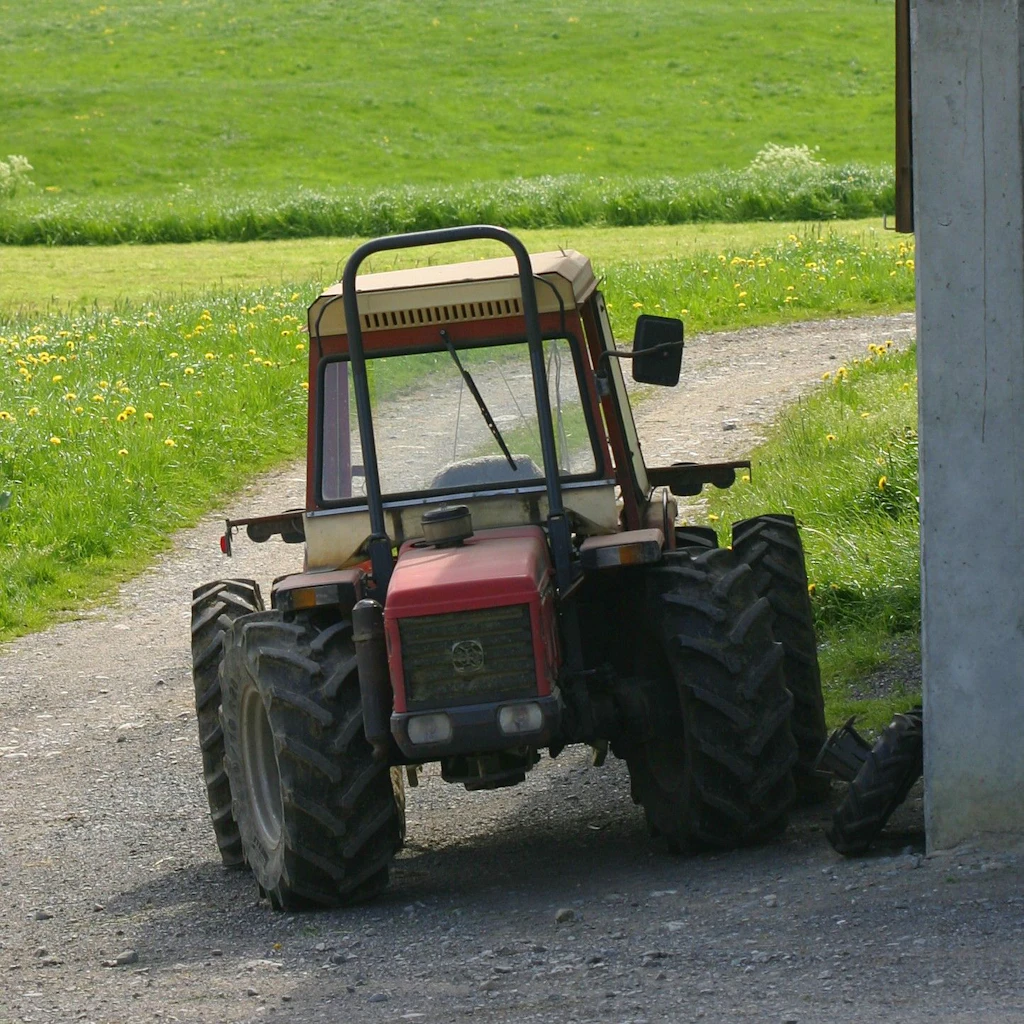
Some non-EU countries require a phytosanitary certificate for the export of used forestry and agricultural machinery and vehicles from Switzerland. The reason for this is that used machinery may have soil or plant debris adhering to it, which may harbour harmful organisms. Before issuing a phytosanitary certificate, the SPPS therefore carries out an inspection to check whether the agricultural machinery, equipment or vehicles to be exported are clean and free from soil or plant debris.
Please check well in advance whether the destination country requires a phytosanitary certificate for the import of used forestry and agricultural machinery and vehicles. Apply in good time at www.phytosanitarycertificate.ch, so that the inspection and issuance of the certificate can be organised in good time. Inspections are carried out on working days only. Depending on the volume of enquiries, it may take up to two weeks for an inspection to take place.
For questions, please contact the Geneva Office of the SPPS at: phyto.geneve@blw.admin.ch | Tel. +41 58 464 33 88
International trade carries the risk of harmful pests, such as the Asian longhorn beetle, being transported as ‘stowaways’ in wood packing materials. To mitigate this risk, the ‘International Standard for Phytosanitary Measures No. 15’ (ISPM 15) stipulates that wood packaging material must be treated (see FOEN: Wood packaging under ISPM-15-Standard).
Treated wood packaging must bear an ISPM 15 stamp or must be accompanied by a valid phytosanitary certificate.
Note: ISPM 15 requirements must be met when dispatching goods with wood packaging material.
Frequently asked questions
As the UK is a non-EU country, a phytosanitary certificate is required for your houseplant as part of your household effects. However, depending on the plant species, it may be that the plant is generally prohibited from import and therefore a phytosanitary certificate cannot be issued. Please check the import regulations of the destination country in advance and apply for the required phytosanitary certificate at www.phytosanitarycertificate.ch. Before the phytosanitary certificate is issued, your houseplants will undergo a phytosanitary inspection, which can be carried out by the SPPS at Geneva Airport, Zurich Airport or at your home. If the plants are found to be free from harmful organisms, you will receive the phytosanitary certificate and may import them into the UK. The invoice for this will be sent to you by post.
Important: Please contact the Geneva Office of the SPPS well in advance so that the inspection and issuance of the certificate can be arranged in good time.
As North Macedonia is not an EU country, a phytosanitary certificate may be required in certain circumstances. This certifies that the machinery, equipment or vehicles to be exported are clean and free from soil or plant debris. Not all non-EU countries require a phytosanitary certificate for agricultural machinery. You should therefore first check the import regulations of the destination country (in this case, with the National Plant Protection Service of North Macedonia). If you need a phytosanitary certificate, you can apply for one online at www.phytosanitarycertificate.ch.
The Swiss Federal Plant Protection Service will then contact you and carry out an inspection of the tractor to check that the machine is free of soil and plant debris. If everything is in order, you will receive the certificate by post. The invoice for this will be sent to you separately by post at a later date.
Before sending maize seeds from Switzerland to the USA, it is important to be aware of the import requirements of the NPPO of the destination country (in this case, the USA). To this end, you should obtain an import authorisation or an official letter setting out the necessary requirements. This information must be forwarded to the SPPS office in Geneva so that the steps required to issue the phytosanitary certificate can be assessed. These may include, among other things, crop inspections, laboratory analyses or further measures.
When exporting, the phytosanitary import requirements of the destination country generally apply. We therefore recommend that you enquire in advance with the German Plant Protection Service and clarify your specific case with them. A list of contacts for all NPPOs can be found on this page of the International Plant Protection Convention (IPPC).
The international requirements for issuing a phytosanitary certificate do not apply to this type of goods. A phytosanitary certificate is only required for plants and plant products that may pose a phytosanitary risk. The following products made from plant material are considered not to pose a risk of introducing or spreading a pest: cigarettes, chocolate, tea, roasted coffee, ointments, tablets, animal feed, laminate flooring and plywood. You therefore do not need a phytosanitary certificate for these or similar products.
Further information
The FOAG provides a reduced English-language version of its website that does not include all further information such as documents, legislation or links. These can be found on the pages in the three official languages (German, French and Italian).