
Check your luggage and your car, stop the Japanese beetle
The Japanese beetle is spreading across Switzerland – often accompanying people as they travel, without being noticed. Here you will find where they are found, how to spot them, and a handy checklist to help you get home beetle-free.
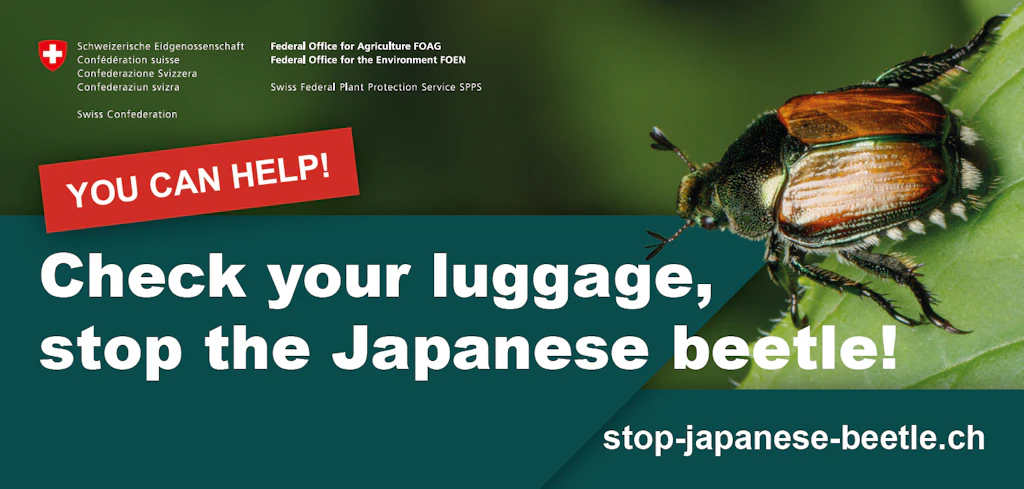
The Japanese beetle – an unwelcome travel companion
Anyone who finds a Japanese beetle in their luggage or car should eliminate it immediately and report it.
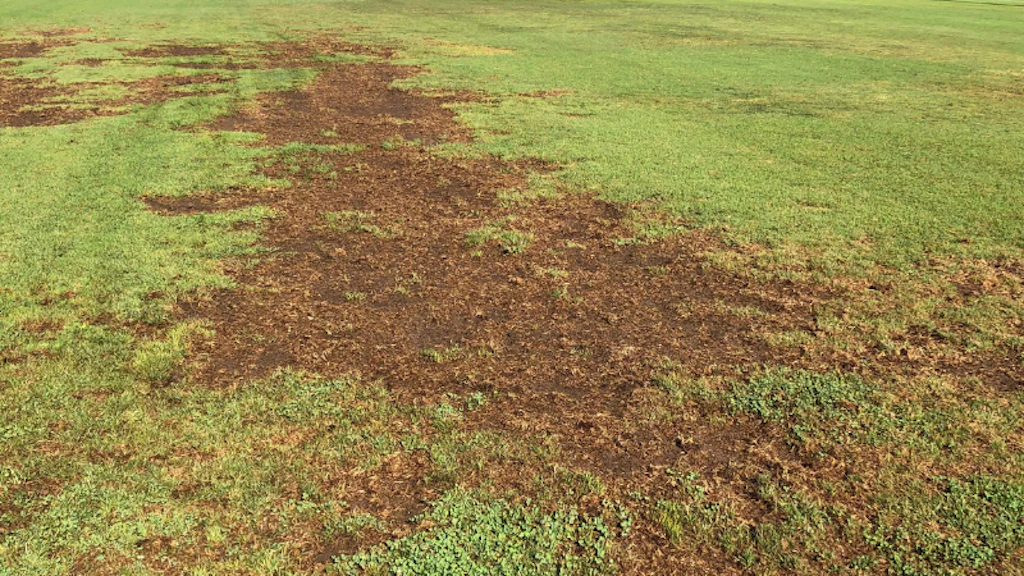
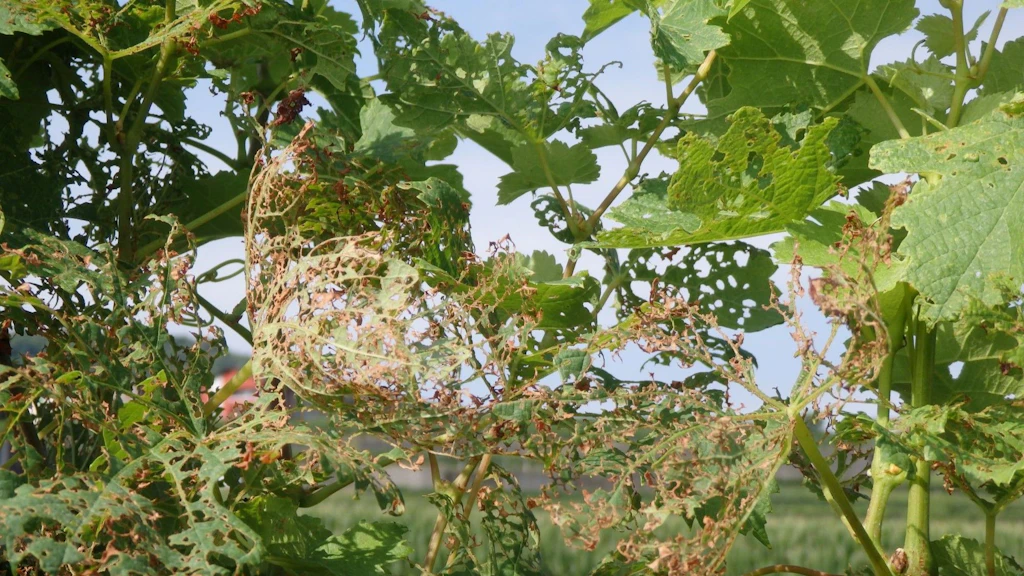
The Japanese beetle is a voracious pest. It eats over 400 different plants – from fruit trees and vines in the fields, to roses and lime trees in the park. It often travels with us unnoticed, spreading from infested areas to new regions. Its larvae and eggs can be transported in soil, while adult beetles hide in plants or in garden waste – or hitch a ride as stowaways in cars, trains, trucks and planes.
Anyone returning from an infested area in the south – for example, from Ticino or northern Italy – can do a lot to stop this: Check your luggage and car carefully before setting off for home. Further down this page, you will find a checklist for your journey home from the south.
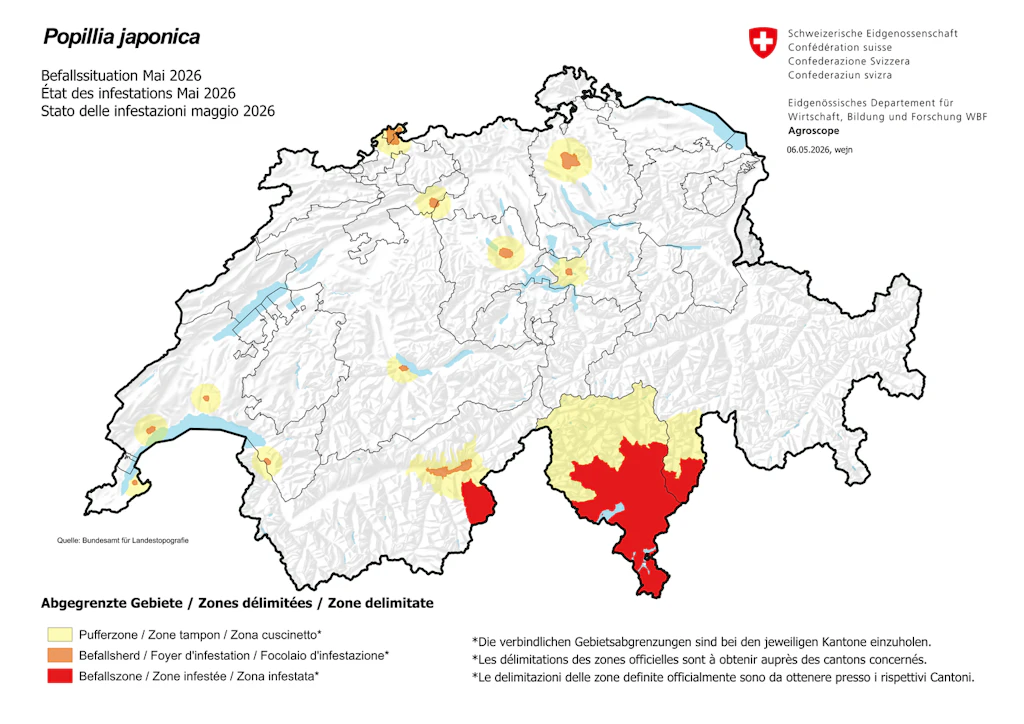
Please take care when travelling from these infested areas
Anyone returning from any of the following places should check their luggage and car before setting off – and know what the Japanese beetle looks like.
- Northern Italy (Lombardy and Piedmont) - e.g. Milan, Varese, Novara, Biella, Vercelli, Asti, Alessandria, Pavia, Lodi.
- Ticino (entire canton)
- Graubünden (particularly Misox)
- Valais (particularly the Simplon region)
The Japanese beetle is established in these areas and its spread is being contained.
How to spot it
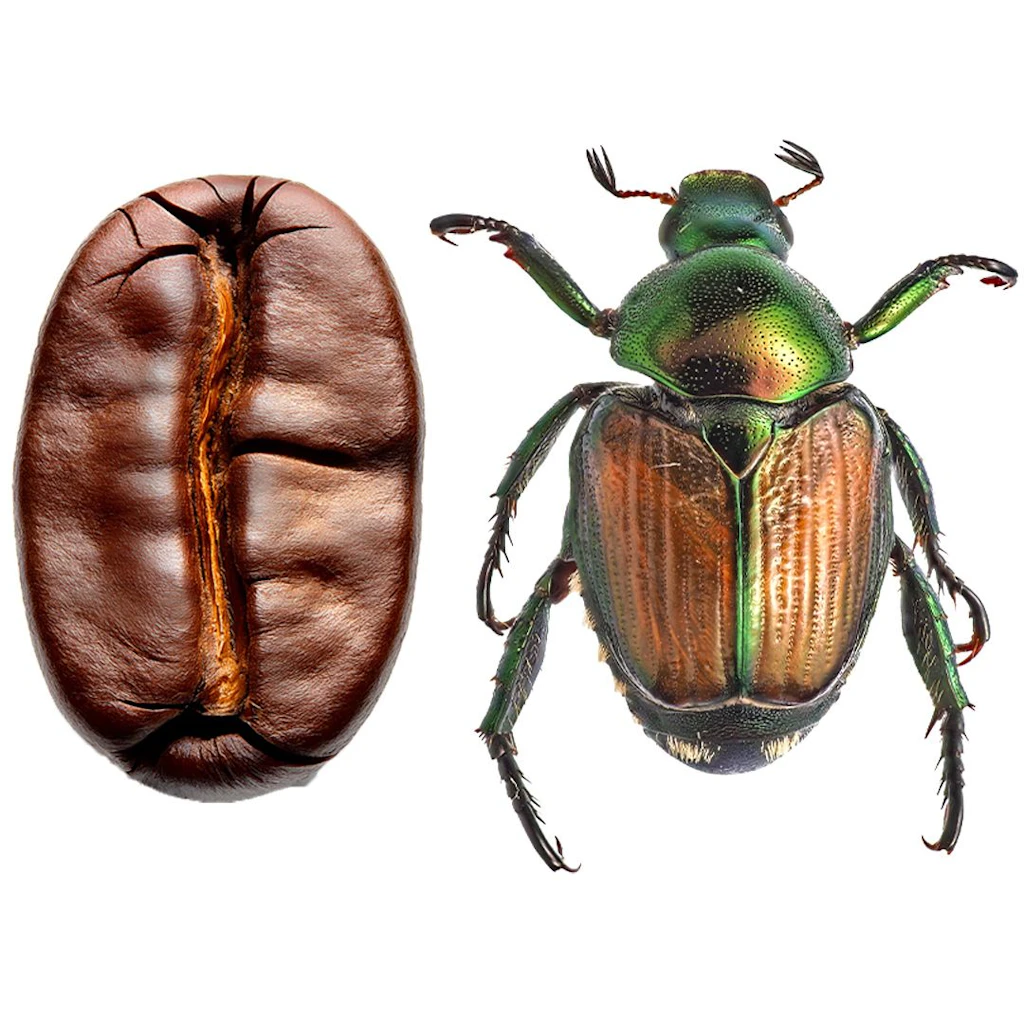
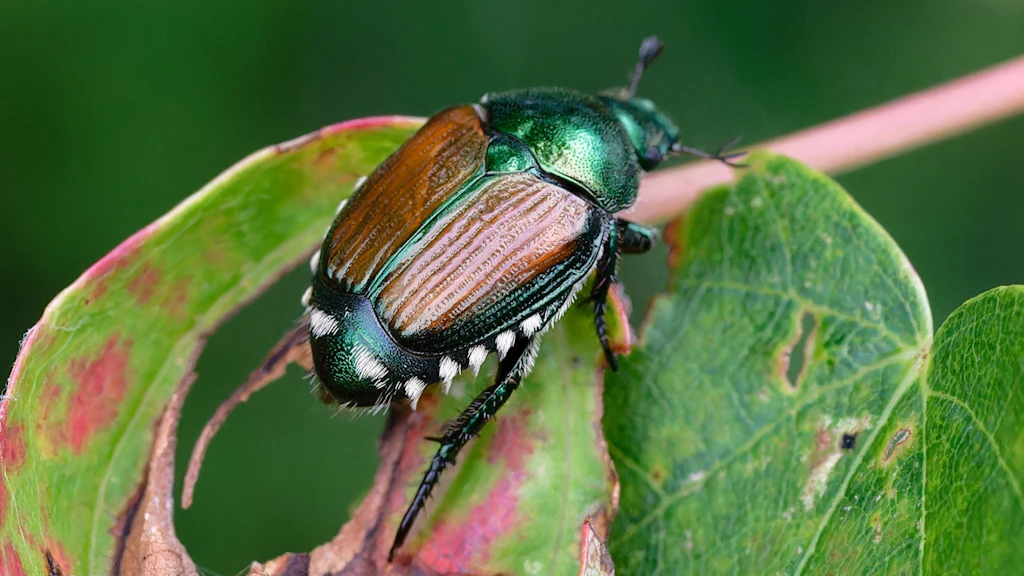
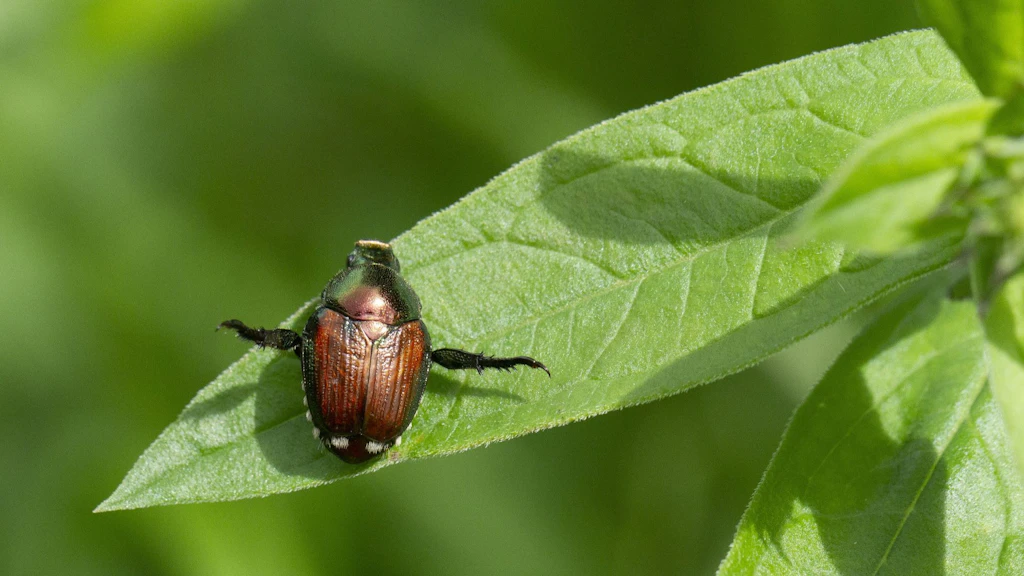
Colour: It has a shiny metallic green head and upper body and copper-brown forewings
Distinctive features: It has five small tufts of white hair on each side of its abdomen. It also has two larger tufts of white hair at its rear.
Observation period: Adult beetles are seen mainly in summer (June–September)
Important: The Japanese beetle resembles some harmless native beetles and so is often mistaken for them. The following photographs will help you to identify the Japanese beetle in comparison with other beetles.


Checklist for the journey home
Before leaving an infested area, check your luggage and car thoroughly.
➡️ Check your luggage
- Clothing, especially outdoor clothing, jackets, shoes
- Bags (rucksacks, handbags, jacket pockets)
- Sports and outdoor equipment such as tents, sleeping bags and bivouacs
- Suitcases and travel bags, inside and out
➡️ Check the car
- Boot
- Seats and footwells
- All openings leading to the outside of the car (radiator grille, air vents, doors, windows, etc.)
Note: Do not park next to vineyards in infested areas – that is where the beetles particularly like to congregate. Also keep the windows of parked cars closed.
⚠️ If you find a Japanese beetle during your check:
- Catch the beetle and do not let it escape
- Check the beetle for the characteristic white tufts of hair on either side of the abdomen
- Take a photograph of the beetle and note down the location where you found it
- Eliminate the beetle (e.g. freeze it, crush it)
- Report the beetle immediately to the relevant cantonal plant protection service (only in German, French and Italian)
Whatever you do, don’t take any beetles home with you. Even if the Japanese beetle is only discovered during the journey or at home, it must be eliminated and reported to the cantonal plant protection service.
You can help!
Not heading south this summer? Here’s how you can still help stop the Japanese beetle:
- Please report any suspicious beetles that you find. The Japanese beetle can also be found outside infested areas. If you find a Japanese beetle, please notify the relevant cantonal plant protection service immediately.
- Know the facts and pass them on. Tell your friends, family and neighbours about the Japanese beetle.
- Share on social media. Repost the FOAG’s social media posts, using the hashtag #StopJapaneseBeetle.
Frequently asked questions

Further information
Index
Related topics
Contact for questions
Swiss Federal Plant Protection Service SPPS
Schwarzenburgstrasse 165
Switzerland - 3003 Bern